The Evolution of Soccer Skills and Techniques: Mastering the Beautiful Game
Soccer, known globally as the beautiful game, is a sport that thrives on skill, creativity, and teamwork. At the heart of this captivating sport lies a variety of techniques that players must master to excel on the field. This article explores the essential skills that define soccer, including dribbling, passing, shooting, defending, goalkeeping, and the tactical strategies that shape modern play.
Dribbling: The Art of Ball Control
Dribbling is one of the fundamental skills in soccer, allowing players to navigate through defenders and create scoring opportunities. The essence of effective dribbling lies in a player’s ability to control the ball while maintaining speed and direction. Players use a variety of techniques, such as the inside and outside of the foot, to maneuver the ball past opponents. Mastering close control is crucial, as it enables players to maintain possession even in tight spaces.
Some of the greatest dribblers in soccer history, like Lionel Messi and Neymar, have demonstrated how creativity and agility can transform a match. Techniques such as feints, step-overs, and sudden changes of pace can leave defenders off-balance and create openings for teammates. Moreover, practicing dribbling in various scenarios—such as one-on-one situations or in traffic—can significantly enhance a player’s effectiveness on the field.
Passing: The Foundation of Team Play
While individual skill is important, soccer is inherently a team sport that relies on effective passing. The ability to accurately pass the ball is fundamental to building attacks and maintaining possession. Players utilize different types of passes—short passes for quick exchanges, long passes to switch play, and through balls to penetrate defensive lines.
A successful pass is not just about distance; it’s also about timing and placement. Understanding when and where to pass can create advantageous situations for the team. For instance, players like Andrea Pirlo and Xavi Hernandez are renowned for their vision and precision, consistently finding teammates in tight spaces and orchestrating the flow of the game. Training drills focused on passing under pressure can help players improve their decision-making and accuracy.
Shooting: The Thrill of Scoring
Scoring goals is the ultimate objective in soccer, making shooting one of the most exciting aspects of the game. A well-executed shot can change the course of a match, so mastering various shooting techniques is essential. Players must learn to shoot with both feet and use different methods, including volleys, half-volleys, and headers.
Power and accuracy are crucial when shooting, and many players develop signature styles that define their approach. Practicing shooting from different angles and distances can prepare players for real match situations. Legendary forwards like Cristiano Ronaldo and Thierry Henry have showcased their unique shooting techniques, often scoring spectacular goals that resonate with fans.
Defending: The Backbone of Team Defense
While scoring is vital, solid defending is equally crucial for a successful team. Defenders are tasked with preventing the opposition from scoring, requiring a combination of positioning, tackling, and strategic awareness. Effective defenders like Franco Baresi and Paolo Maldini have mastered the art of anticipation, often reading the game to intercept passes and disrupt attacks.
Defensive skills include various techniques such as slide tackles, standing tackles, and man-marking. It’s essential for defenders to communicate with teammates, maintaining a cohesive unit that can respond to the opponent’s movements. Training drills that focus on defensive positioning and decision-making can enhance a player’s ability to thwart attacking plays.
Goalkeeping: The Last Line of Defense
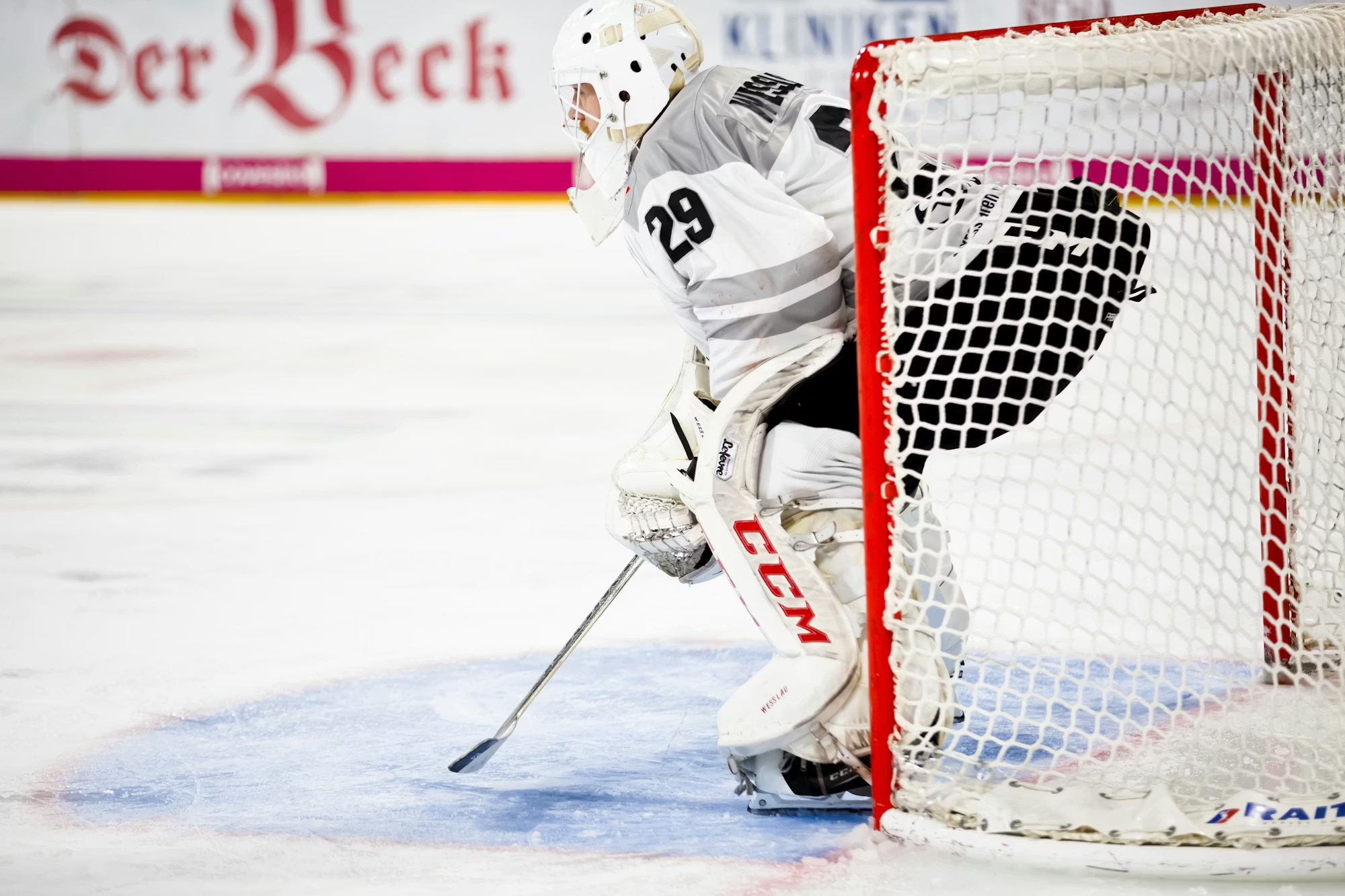
Goalkeepers play a unique and critical role in soccer, serving as the last line of defense against opposing strikers. The skills required for effective goalkeeping include shot-stopping, positioning, and distribution. A goalkeeper must possess quick reflexes and the ability to read the game, making split-second decisions that can determine the outcome of a match.
Techniques such as diving, catching, and positioning are essential for success. Additionally, modern goalkeepers are expected to contribute to the team’s play by distributing the ball effectively, whether through throws or precise kicks. Goalkeepers like Gianluigi Buffon and Manuel Neuer have redefined the position, showcasing their ability to not only save goals but also initiate attacks from the back.
Tactical Strategies: The Chess Game of Soccer
As the game of soccer evolves, so too do the tactics employed by teams. Coaches and players must understand various formations and strategies to outmaneuver opponents. Common formations include 4-4-2, 4-3-3, and 3-5-2, each with its strengths and weaknesses.
Tactical awareness allows teams to adapt their play style based on the opposition’s strengths and weaknesses. For example, a team may choose to play defensively against a stronger opponent while employing a more aggressive approach against a weaker side. The implementation of pressing, counter-attacking, and possession-based strategies adds layers to the game, requiring players to be versatile and knowledgeable.
Conclusion
Mastering the skills and techniques of soccer is a lifelong journey for players at all levels. From dribbling and passing to shooting, defending, and goalkeeping, each skill contributes to the collective success of a team. The tactical strategies employed in modern soccer further emphasize the importance of understanding the game as a whole. By dedicating time to practice and development, players can enhance their abilities and, ultimately, their enjoyment of the sport. As soccer continues to evolve, the emphasis on skill development remains crucial, ensuring that the beautiful game captivates audiences for generations to come.